An AI groovebox in the browser: twelve tracks, a custom synth engine and a self-trained pattern model, running entirely in your browser.
Beats from the browser: AI Music Mixer
A groovebox with its own AI model. No account, no install.
What is the AI Music Mixer?
A musical instrument as a web page, and a test of how far AI-assisted software engineering carries today.
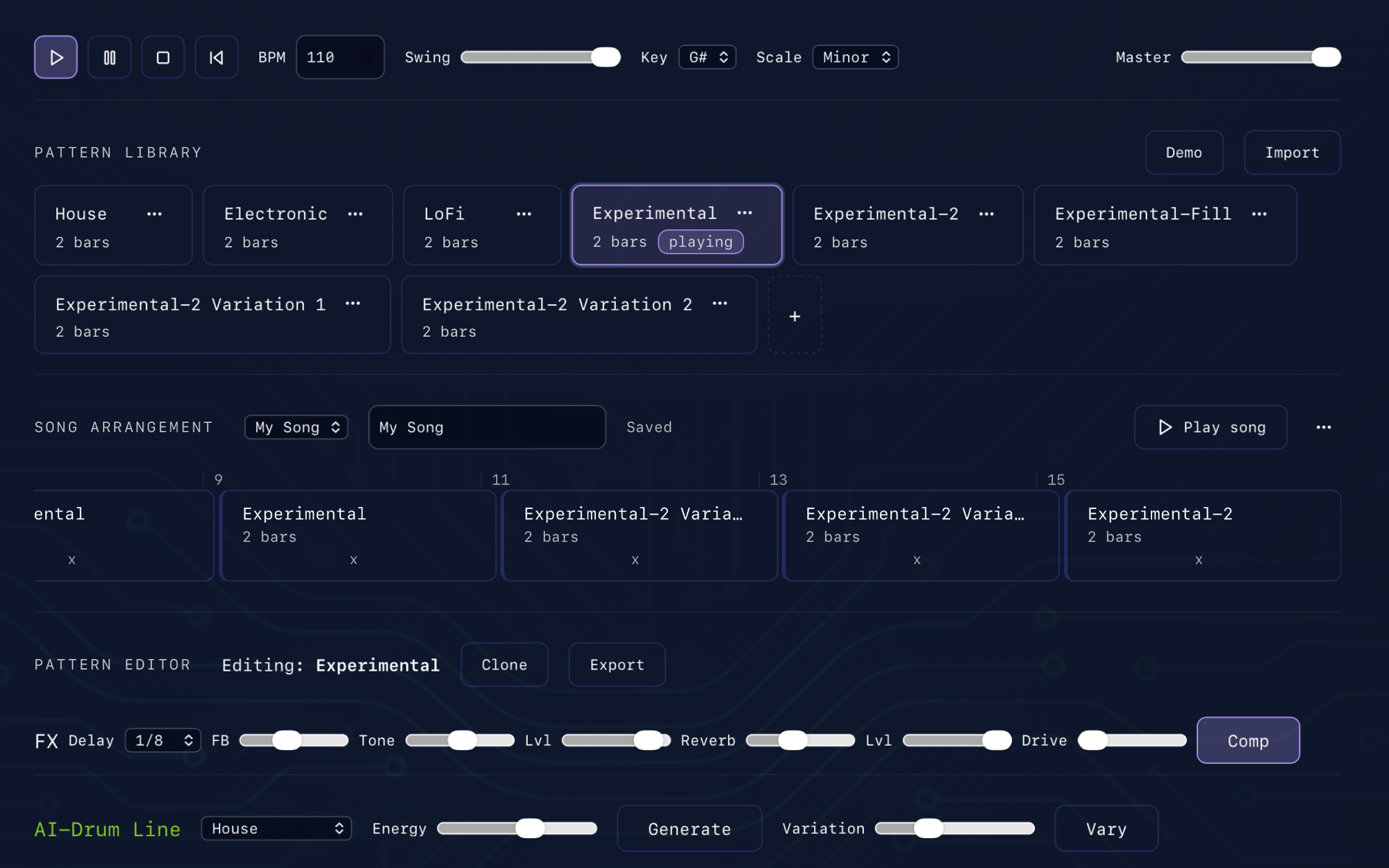
The AI Music Mixer is a groovebox that runs as a browser application: pick a pattern, press play and reshape the beat right in the tab. A self-trained AI model generates and varies the drum patterns.
It was built as an engineering showcase: a real piece of software that shows what AI tooling builds well, where it fails and what stays human work. The training code is open.
Twelve tracks, a custom synth engine
Everything you hear is computed in your browser the moment you press play.
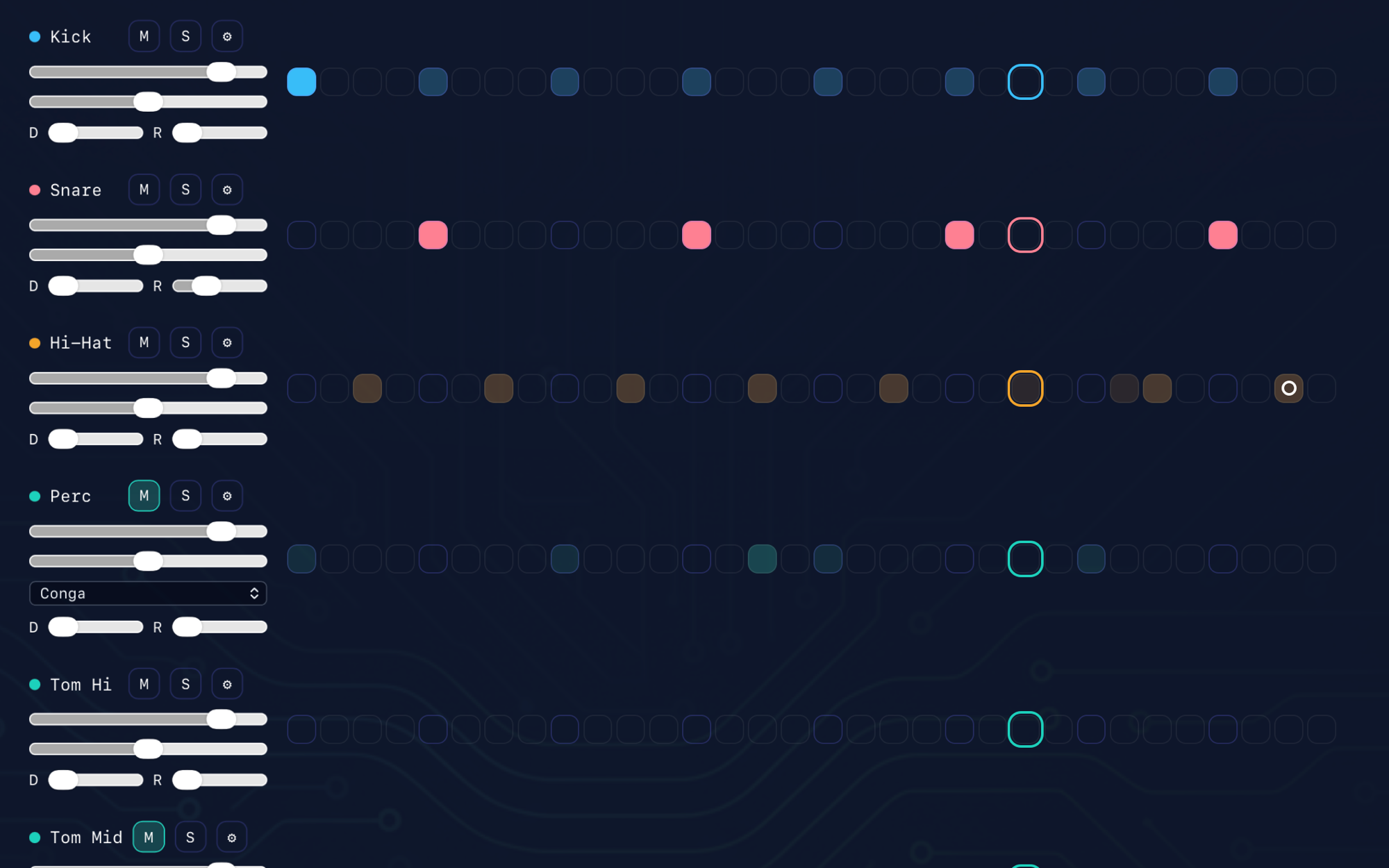
Twelve tracks cover drums, bass, chords and melody. Every sound comes from a custom synth engine, synthesised from first principles, with no third-party samples.
A pattern bank stores variations of a groove, and the song mode chains them into an arrangement. That way a single pattern can grow into a full track.
A custom model that runs in the browser
The interesting part of this project is machine learning where your music is made: in the browser tab.
A self-trained variational autoencoder (VAE) generates the drum patterns: eight drum classes, five styles including "Fills". The model has about 276,000 parameters and weighs roughly 540 KB.
Inference runs entirely in the browser via TensorFlow.js. On the test split, the model reproduces held-out patterns with an onset F1 around 0.70.
What the model cannot do
We publish measurements instead of demo magic, including the inconvenient ones.
The model under-generates open hi-hats and toms, because both are rare in its training genres.
Quantising human playing to a sixteenth-note grid costs about 7 percent of the original onsets. That is the price of simplification, and we state it rather than hide it.
Hear it yourself
The mixer runs directly in the browser, with no account and no installation.